I am leading a project at Just Eat Takeaway to address a significant drop in courier interaction over 63% weekly. The initiative focuses on identifying the root causes of this decline and implementing solutions to enhance courier engagement and overall operational efficiency.
Courier interaction with the application has dropped by over 63% on a weekly basis. I am leading a project to investigate the root causes of this decline and develop solutions to improve courier engagement.
Research and Data
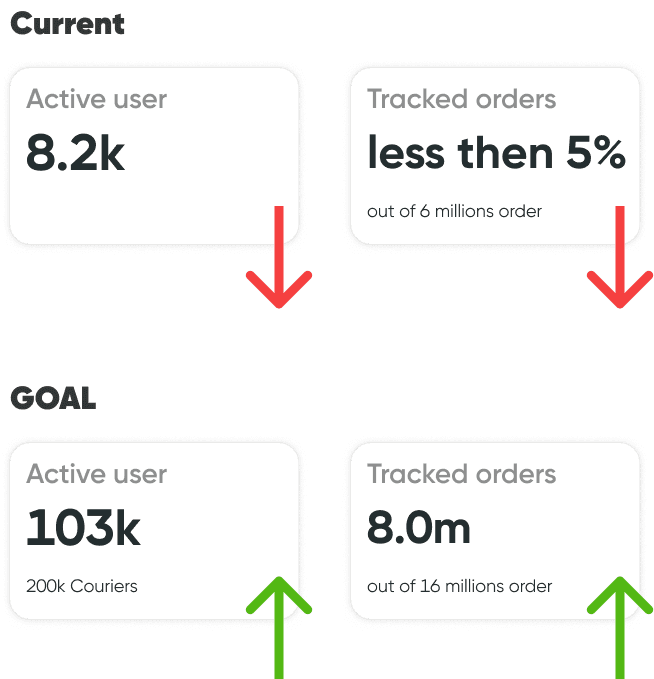
Data and research reveal that users are avoiding the app, primarily due to the outdated design, which relied on static information. Currently, only 5% of total orders from the marketplace are processed through our app. Our goal is simple: improve the route planner to encourage couriers to use the app and measure our success by tracking orders.
We aim to track all 6 million orders processed monthly. By aligning our research and data, we can make informed improvements to the application.
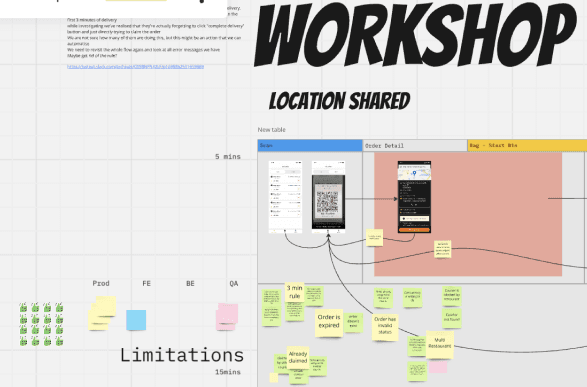
Workshop
During this workshop, we discussed the possibilities on the backend, helping us understand what can and cannot be done. We then moved on to exercises that allowed us to brainstorm ideas and explore potential concepts for implementation. This approach provided clarity on the technical constraints while fostering creativity in developing solutions. By combining both aspects, we were able to better align our ideas with the system's capabilities. The session encouraged collaboration and innovation to drive meaningful improvements.
Workshop Outcome
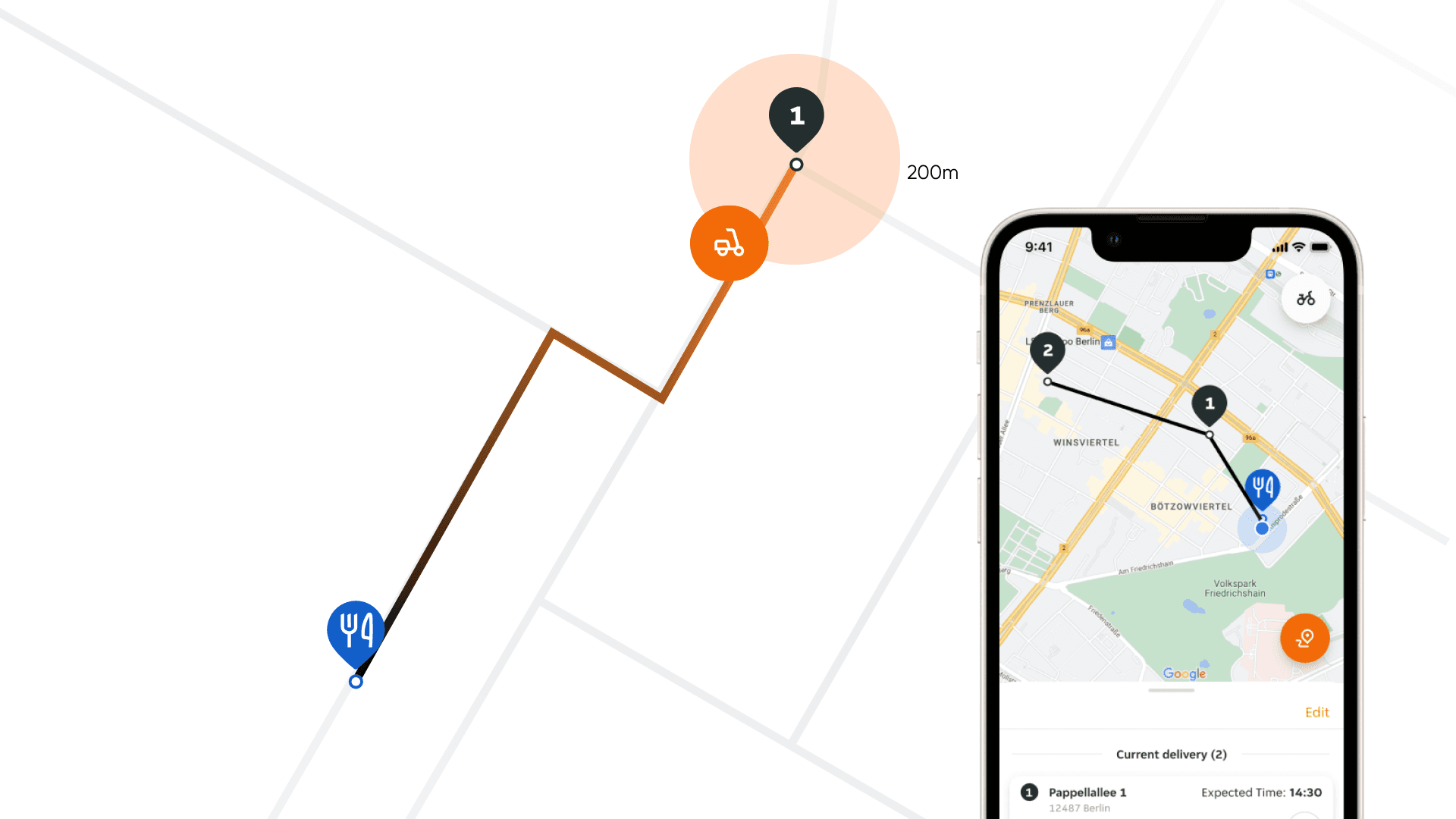
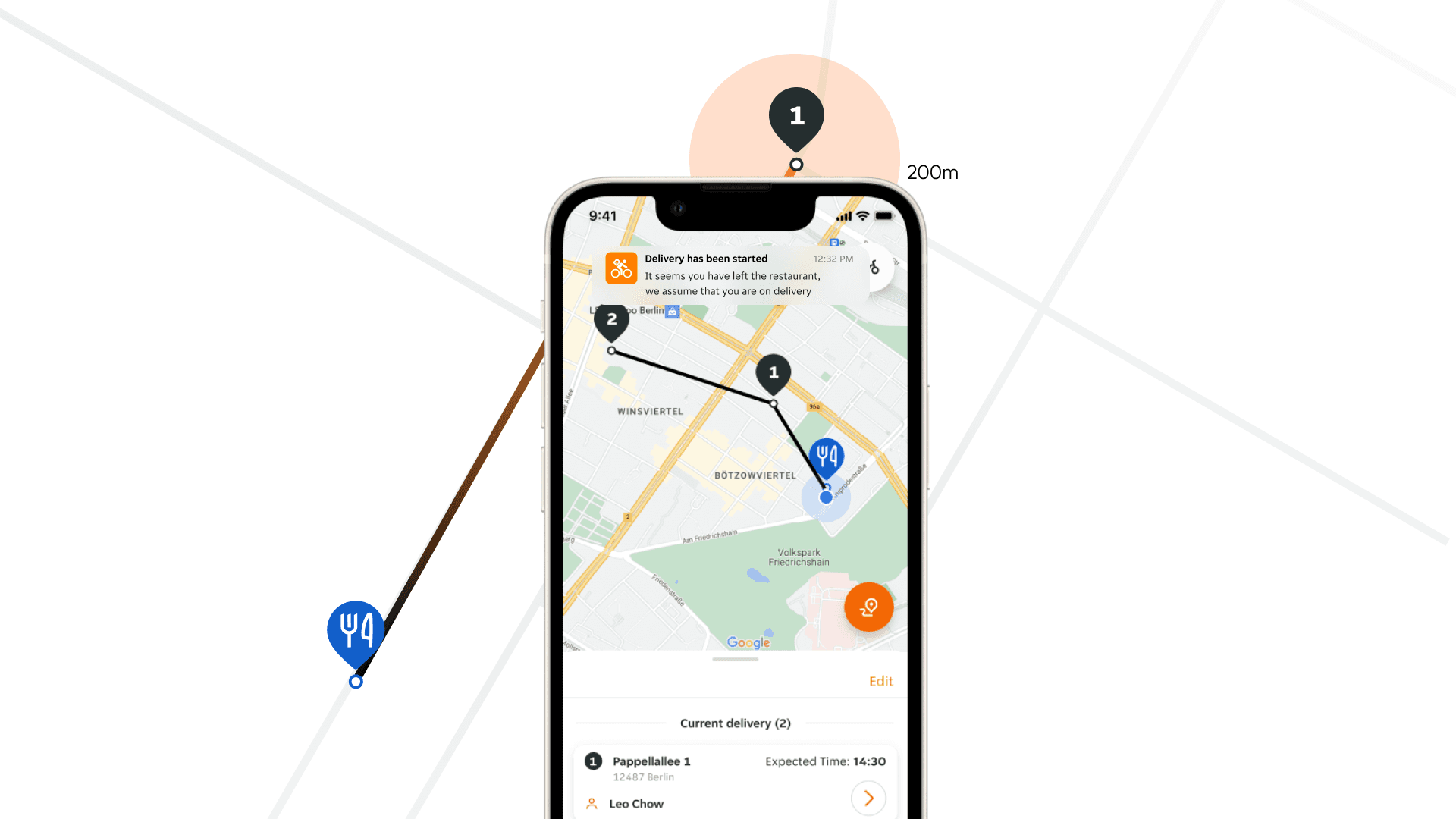
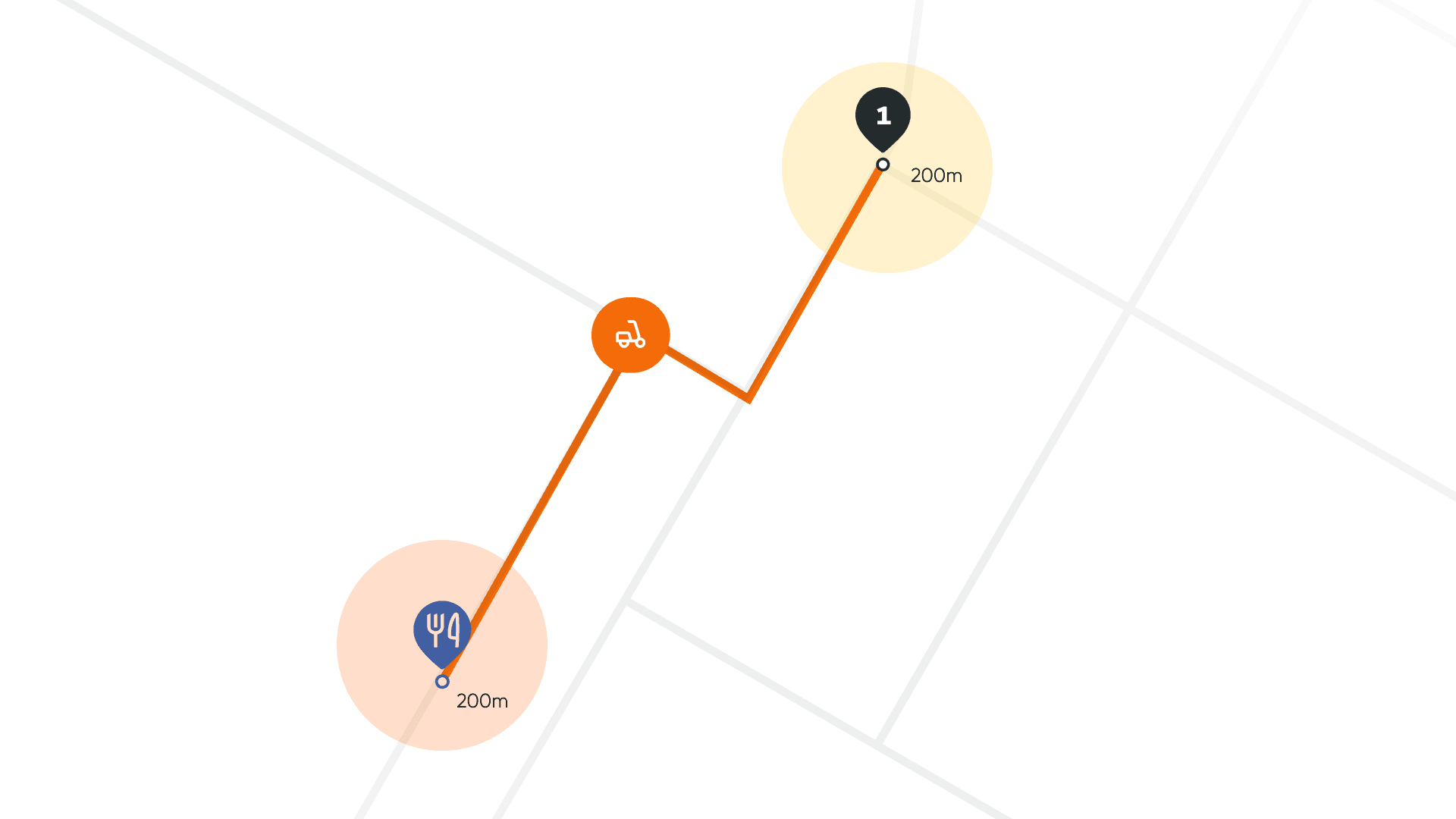
The outcome of this workshop helped us identify key drivers for automating geofencing, allowing couriers to interact less with the app. This will increase the number of tracked orders, enabling us to measure success criteria. We also agreed that this automation should be a default feature, always active but not visible to the courier. Additionally, we decided that a 200-meter radius on Google Maps provides the best accuracy, as larger radii could cause overlap with the customer's address.




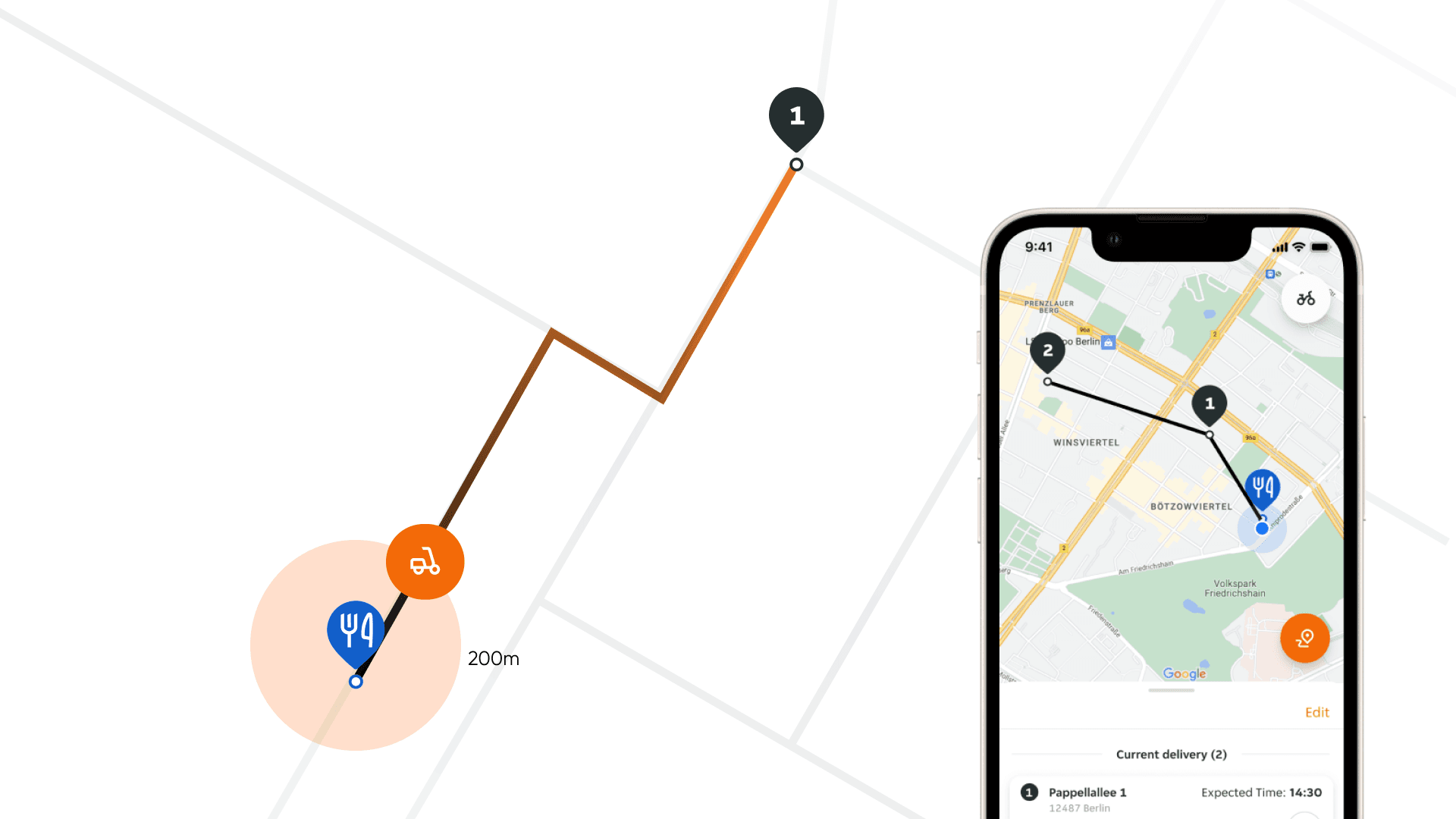
Restruant Fencing
By setting up a 200meter radius around the restaurant, an event will be triggered when the courier is outside this radius for more than 3 minutes. This will automatically start the delivery, sending the customer an update with tracking information.
Customer Fencing
A 200meter radius will also be set around the customer's address. If the courier is within this radius for more than 3 minutes, the delivery will be marked as complete, and the customer will receive an update with the delivery status and tracking information.