Lieferando Customer courier chat
Customer Courier Chat

Team
Marketplace
14 Members
Role
Staff Product Designer II
Project
Customer Courier Chat
Scope
Usability Testing
Documentation
Workshops
Stakeholders
Timeline
12 Months
Overview
Lieferando handles a high volume of trackable orders, yet delivery reliability remains low. Around 55% of orders arrive late and 26% are never delivered, mainly due to incomplete addresses, complex routes, and failed courier–customer communication. Post-COVID contactless delivery expectations have further increased ambiguity at the last mile.
Problem
Despite order tracking, Lieferando lacks clear, actionable last-mile delivery information. Incomplete addresses, unclear drop-off instructions, and unreachable customers lead to delays, high call-center load, courier frustration, and failed deliveries.

Sendbird
We introduced in-app chat using Sendbird, built on Sendbird’s existing design system to ensure speed, consistency, and faster implementation. Using Sendbird’s backend, we enabled attachments such as images, videos, and voice messages, allowing couriers and customers to share precise delivery context. The chat activates only near delivery and uses short messages and quick replies to reduce cognitive load. This setup reduced calls, supported contactless delivery, and gave teams flexibility to design and extend features later.
Process
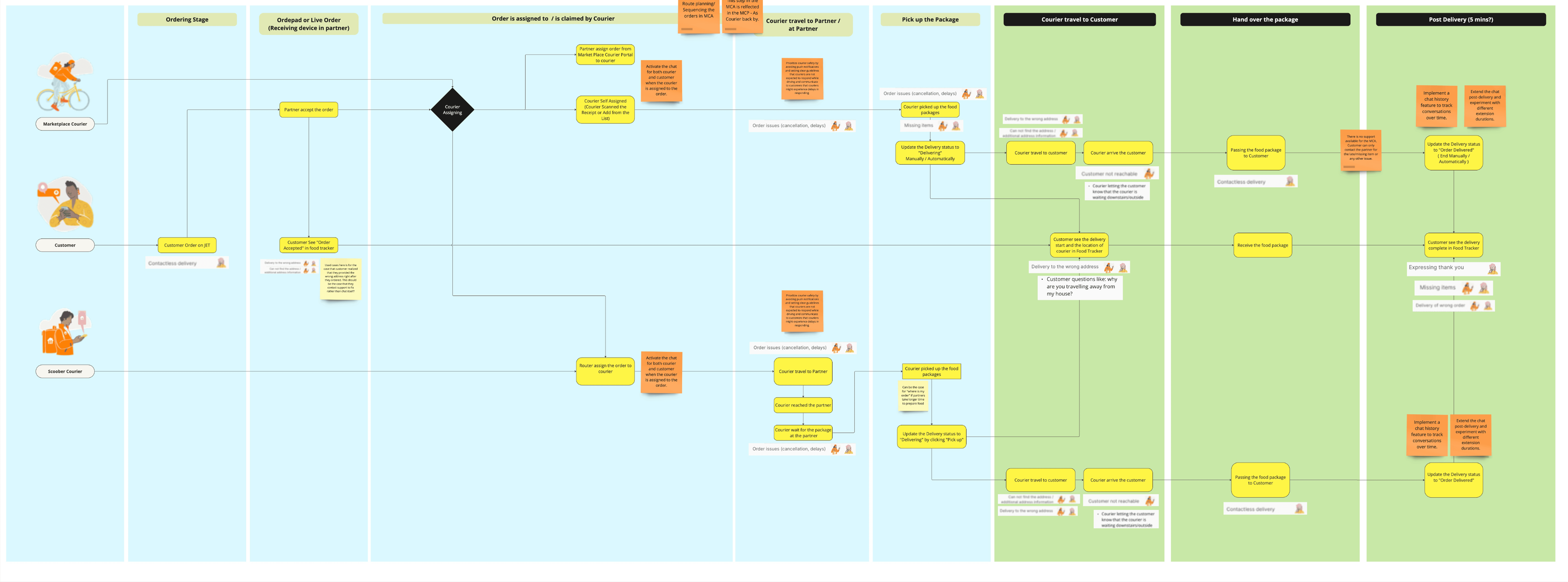
We started by evaluating Sendbirds' capabilities and limitations, including its design system, SDK constraints, and backend features, to understand what could be shipped quickly versus what required custom design. These insights helped identify opportunities such as delivery-triggered chat activation, structured quick replies, and media sharing. Based on this, we created a phase-by-phase journey map covering pre-delivery, at-door, and post-delivery moments. This journey map guided how Sendbird was progressively integrated into the app, ensuring the chat solved real last-mile problems without adding unnecessary complexity.
We analyzed common delivery failure conditions to understand where last-mile communication breaks down. These included incomplete or unclear addresses and delivery instructions, complex building access, and situations where couriers could not locate the customer.


In parallel, we mapped order-related issues such as wrong orders, missing items, and post-COVID contactless delivery expectations. Customers often wanted food left at specific locations without direct interaction, while couriers needed confirmation and proof of delivery.
Chat
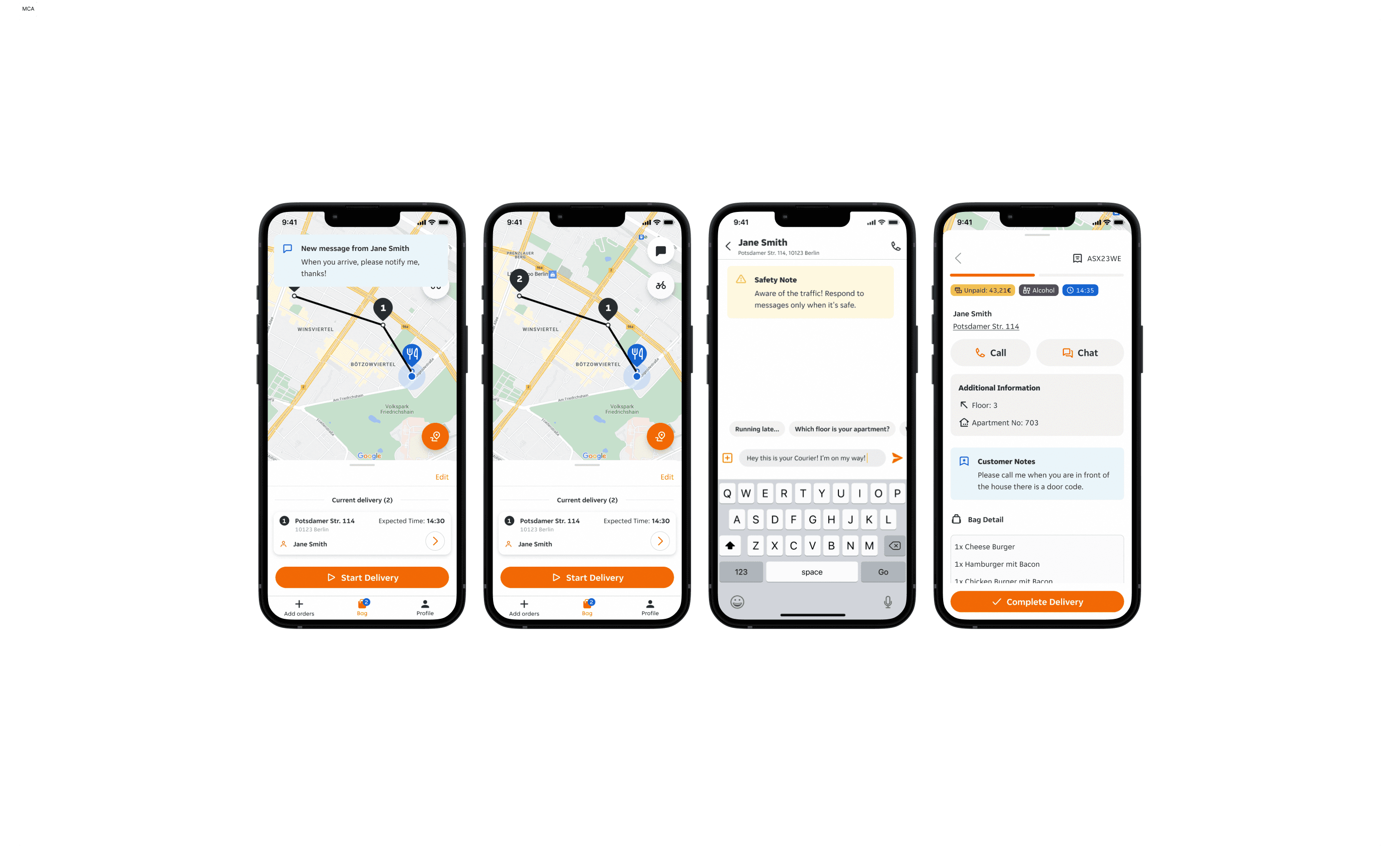
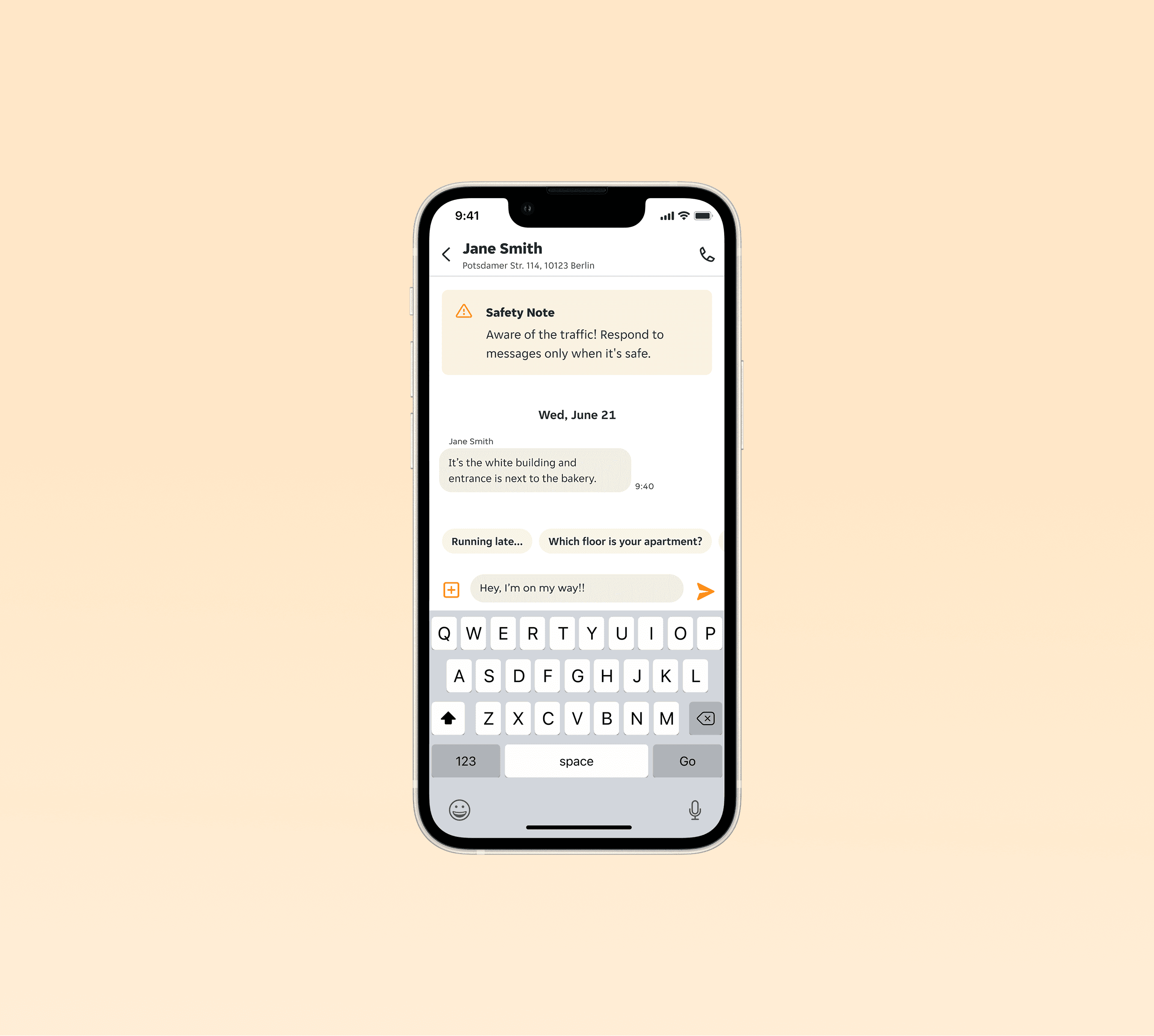
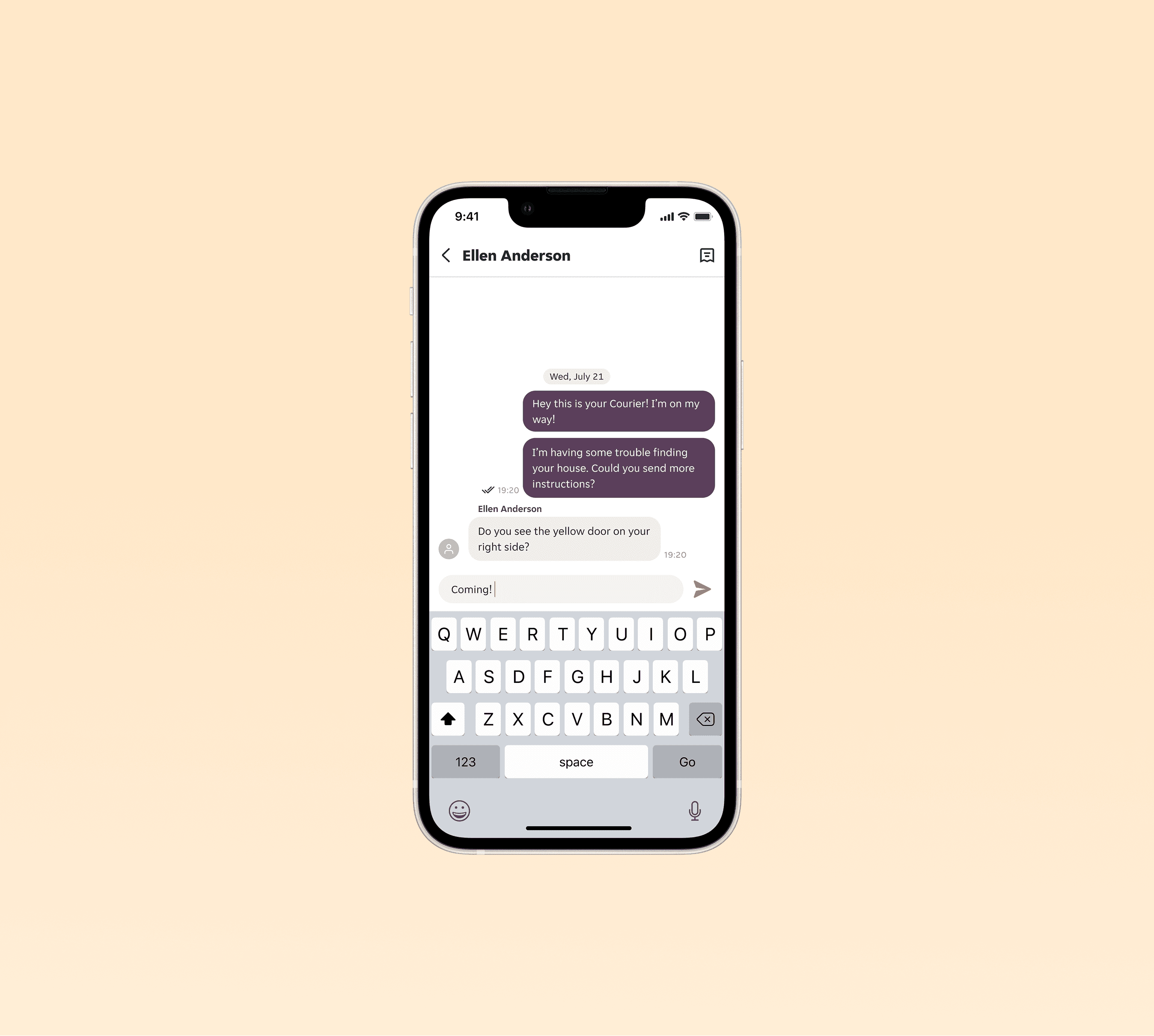
Sendbird was integrated into the Lieferando app with a single, clear entry point for couriers to start a chat with customers, reducing decision-making and friction during delivery. Chat availability is triggered automatically through geofencing when the delivery starts, allowing customers to see the chat icon at the right moment without manual setup.

Lowkey
This ensures communication happens only when it is relevant and time-sensitive.
In the first phase, the chat experience was intentionally kept text-only, excluding images and voice notes to minimize complexity and cognitive load. This allowed couriers to resolve issues quickly while validating core communication flows. Media sharing was planned for later phases, once the chat feature proved effective and stable.
Internal Integration
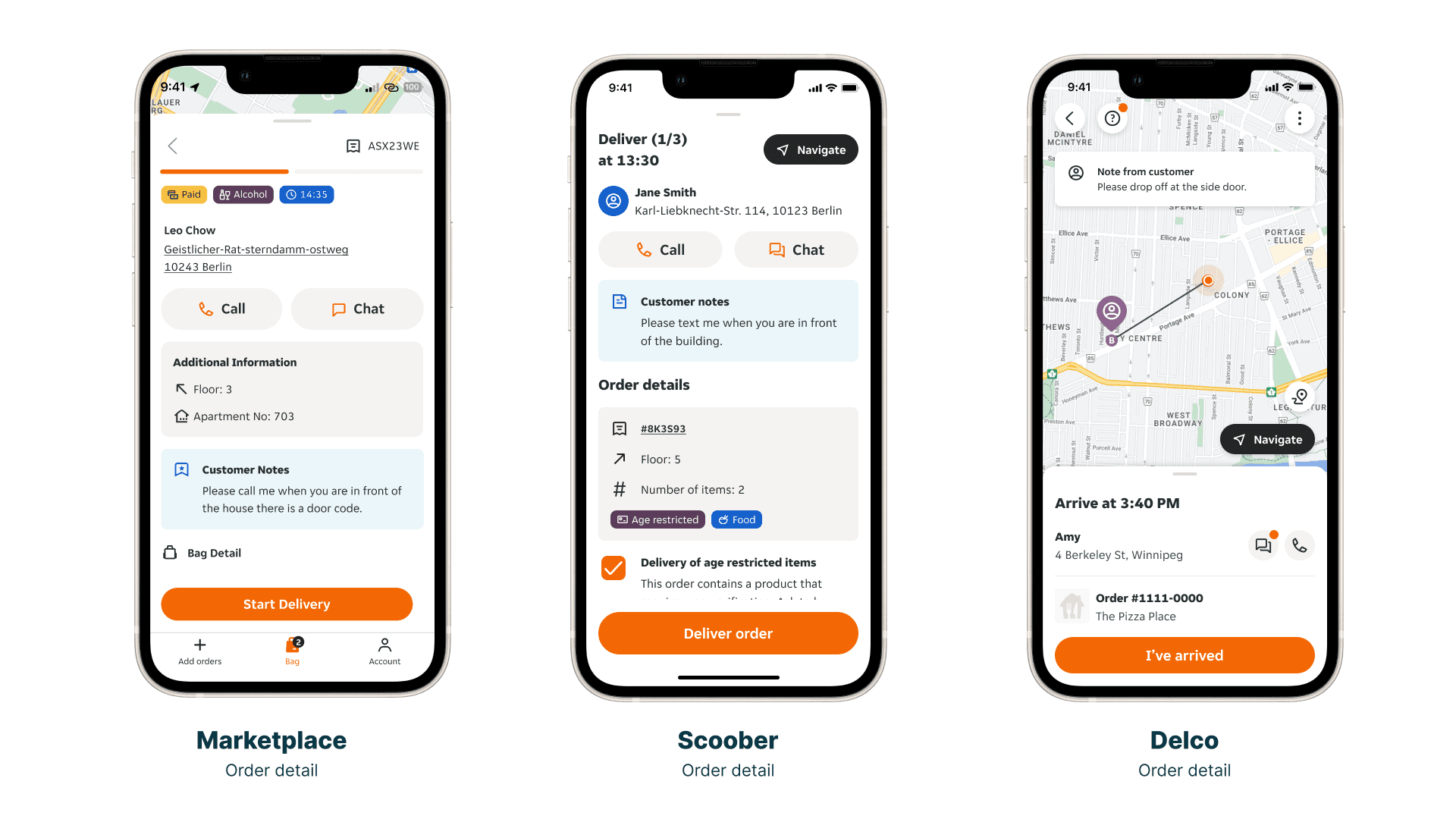
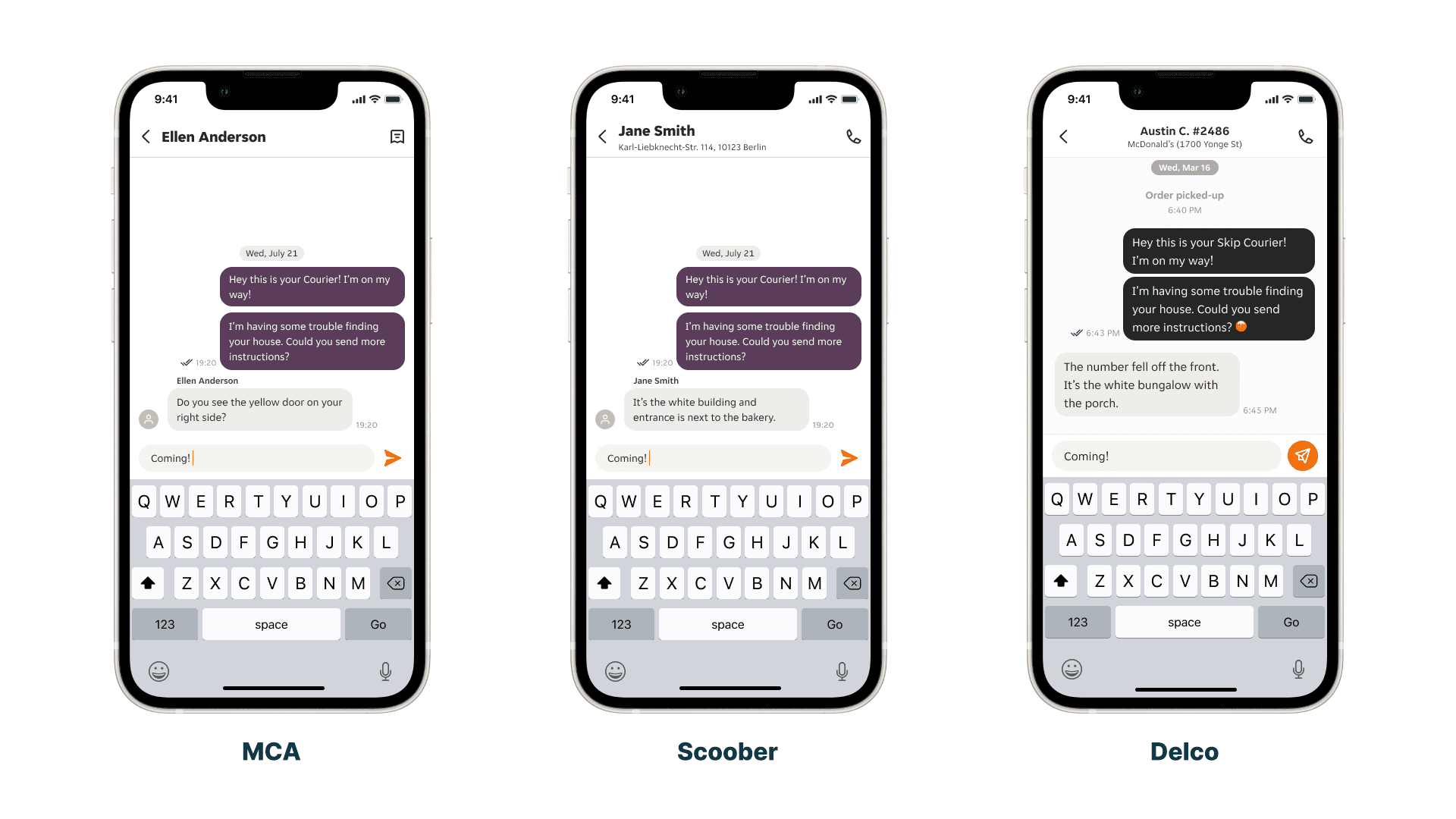
The Marketplace CC-Chat became a benchmark for the entire courier team, demonstrating a reliable, low-friction communication flow. Its design and interaction patterns were later adapted for other courier applications across Canada and the EU, ensuring consistency across regions. By reusing the same structure and flow, we strengthened visual and functional consistency across the Just Eat ecosystem, reducing learning curves for couriers and maintaining a unified experience.